Checked on by La rédaction d'ArdennenBelgie.be · Methodology

The National Park in numbers

An exceptional territory in the heart of the Belgian Ardennes, protected and promoted since its recognition in 2022.

~28,900
Hectares protected
2022
Creation year
8
Member municipalities
1st
Walloon national park

Source : Parc national de la Vallée de la Semois / Wallonie.be — accessed on 29/09/2026

An extraordinary Ardennes landscape

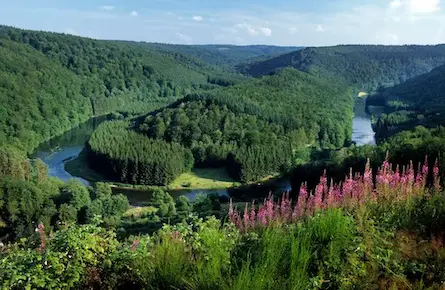
For millennia, the Semois has been sculpting the Ardennes hills into majestic meanders.

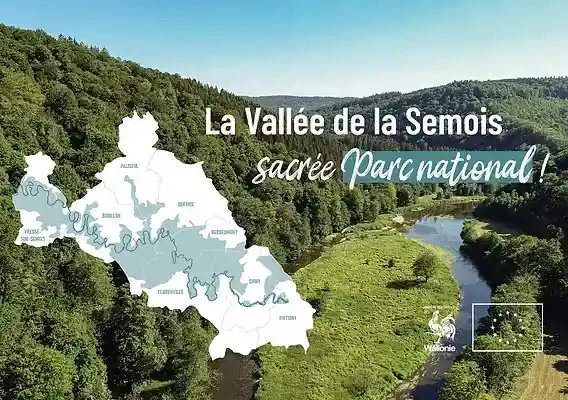
The Semois Valley National Park is the first national park recognized by the Walloon Region. Officially recognised in 2022 (decision of the Walloon Government, December 2022), it covers ~28,900 hectares of Ardennes valley, between Tintigny in the east and Bohan in the west — a ribbon of wild nature along the river.

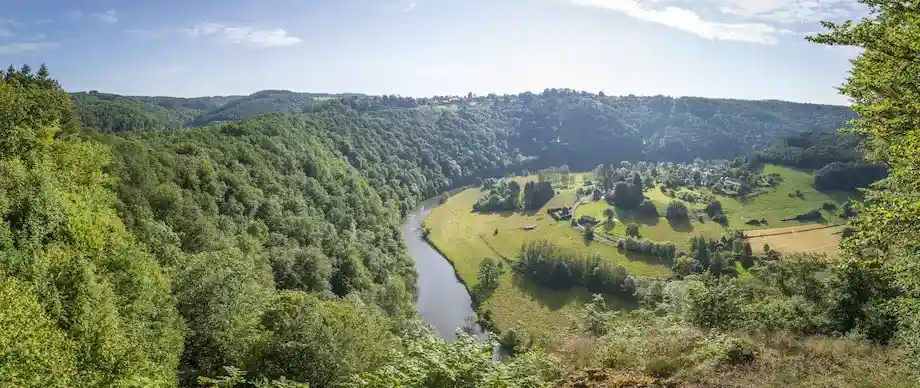
Its deep looping meanders, visible from the famous belvederes of Membre, Vresse and Botassart, are recognized among the most beautiful landscapes in Belgium. The Semois flows through a setting of deciduous forests — beech, oak, hornbeam — which are adorned with flamboyant colors in autumn.

This territory already benefited from partial protection via the Natura 2000 network and the Haute-Sûre Forêt d'Anlier Nature Park. The national park status now reinforces this protection and structures a visitor reception that is respectful of the ecosystems.

Wild meander of the Semois seen from the Membre belvedere – Wallonia National Park
🎧

National park soundscape

Birdsongs, lapping of the Semois, wind in the beeches — authentic sounds recorded in the heart of the park.

Gallery – Semois National Park

Meanders, wildlife, forests, and activities along the Semois.

Emblematic fauna of the national park

The exceptional water quality of the Semois and the integrity of the Ardennes forests promote a biodiversity rare in Western Europe.

🦦

European Otter

Lutra lutra

Symbol species of the park, successfully reintroduced. The Semois is one of the last Walloon strongholds for the otter. It hunts at dawn and dusk — the muddy banks reveal its characteristic footprints.

🔴 Strictly protected species
🐦

Common Kingfisher

Alcedo atthis

An electric blue and orange flash along the banks. An indicator of water quality — its presence proves a healthy river. It is often spotted at dawn along the banks.

🟡 Annex I protected species
🦫

Eurasian Beaver

Castor fiber

Reintroduced since the 1990s, the beaver reshapes the banks and creates wetlands favorable to many other species. Its dams and lodges are visible on some tributaries of the Semois.

🔴 Strictly protected species
🦅

Peregrine Falcon

Falco peregrinus

Nests on the Ardennes sandstone cliffs overlooking the Semois. Returned naturally after the ban on organochlorine pesticides. Its dives at over 300 km/h fascinate hikers and ornithologists.

🔴 Strictly protected species
🐟

Brown Trout

Salmo trutta

The Semois is classified as a salmonid zone (class A). The brown trout, demanding in water quality and coolness, is present in the most preserved areas of the park. Fishing is allowed there with a permit.

🟡 Regulated fishing zone
🦋

Alcon Blue

Phengaris alcon

A rare butterfly linked to gentian wetlands. Its presence in the national park testifies to the integrity of the valley's meadows and peat bogs. Its complex life cycle involves ants of the genus Myrmica.

🔴 Natura 2000 priority species
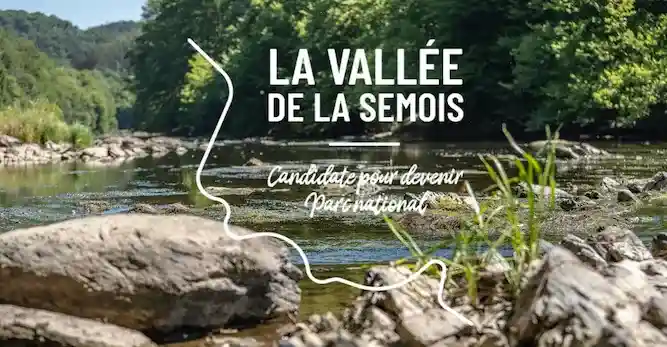
Clear shallows of the Semois between wooded banks in the Semois Valley National Park

The Semois river in the heart of the national park

The river carves the wild meanders that give the park its character: banks inhabited by otters and kingfishers, forests leaning towards the water, schist villages at every bend. The best viewpoints are reached on foot, from Vresse-sur-Semois, Membre, Alle or Bohan.

The Semois can also be paddled by kayak; the water level varies with the seasons and is worth checking before setting out. See the Kayak Belgique website.

⚠️ Respecting the national park

Stay on the marked paths, keep your distance from nesting areas and leave no waste behind: the banks shelter protected species.

Frequently Asked Questions – Semois National Park

Everything you need to know before visiting Wallonia's first national park.

What is the Semois Valley National Park?

The Semois Valley National Park is the first national park in Wallonia (Belgium), officially recognised in 2022. It protects ~28,900 hectares of Ardennes landscapes along the Semois river, between Tintigny and Bohan. It is classified for its wild meanders, deciduous forests, exceptional biodiversity (otter, beaver, kingfisher, peregrine falcon), and emblematic panoramas. Access is free and open all year round.

When was the Semois National Park created?

The Semois Valley National Park was officially recognised by the Walloon Government in December 2022, making it the very first national park in Wallonia. This status follows years of consultation between riverside municipalities, the Walloon Region, and nature protection associations. The Semois already benefited from partial protection via the Natura 2000 zone status.

Which municipalities are part of the Semois National Park?

The Semois Valley National Park encompasses 8 municipalities: Vresse-sur-Semois, Bouillon, Herbeumont, Chiny, Florenville, Tintigny, Paliseul, and Bertrix. The hydrographic network of the park totals about 675 km of watercourses. Each municipality contributes to the management of the park and the welcoming of visitors.

What is the biodiversity of the Semois National Park?

The biodiversity is exceptional: European otter (Lutra lutra) — symbol of the park, successfully reintroduced; Eurasian beaver (Castor fiber) — its dams create wetlands; kingfisher (Alcedo atthis) — indicator of water quality; peregrine falcon nesting on the cliffs; brown trout in class A waters. The river is also the habitat of the Alcon blue, a priority Natura 2000 butterfly.

Can you enjoy the Semois river inside the National Park?

Yes. The Semois flows through the heart of the National Park and can be enjoyed from its banks: waymarked paths, viewpoints and villages such as Vresse-sur-Semois, Bouillon and Herbeumont give access to its wild meanders and to wildlife such as herons and kingfishers. Stay on the marked paths near nesting areas.

How do I access the Semois National Park?

Several entry points: Vresse-sur-Semois (heart of the park, starting point for hikes, via N95 from Bouillon or E411 exit 25); Bouillon (eastern gateway, accessible by train to Bertrix + bus); Florenville (southern gateway, SNCB train station with Brussels connections); Tintigny (eastern gateway). By car from Brussels: E411 towards Arlon, about 1.5 hours. The park is fully accessible to pedestrians and cyclists via the RAVeL network.

What activities are allowed in the Semois National Park?

Allowed: hiking (>300 km of marked trails), cycling on the RAVeL, wildlife observation and nature photography, fishing with a Walloon fishing license in authorized areas, picnicking in dedicated areas. Prohibited or regulated: wild camping, campfires, picking protected species, motorized vehicles off-road, disturbing protected species (nesting areas).

🌿

Plan your visit to the Semois National Park

Otters, kingfishers, beavers — nature reveals itself to those who walk quietly along the Semois. Villages, viewpoints and places to stay are close at hand.

🗓️ Weekend itinerary 🏘️ Beautiful villages 🏰 Bouillon Guide